



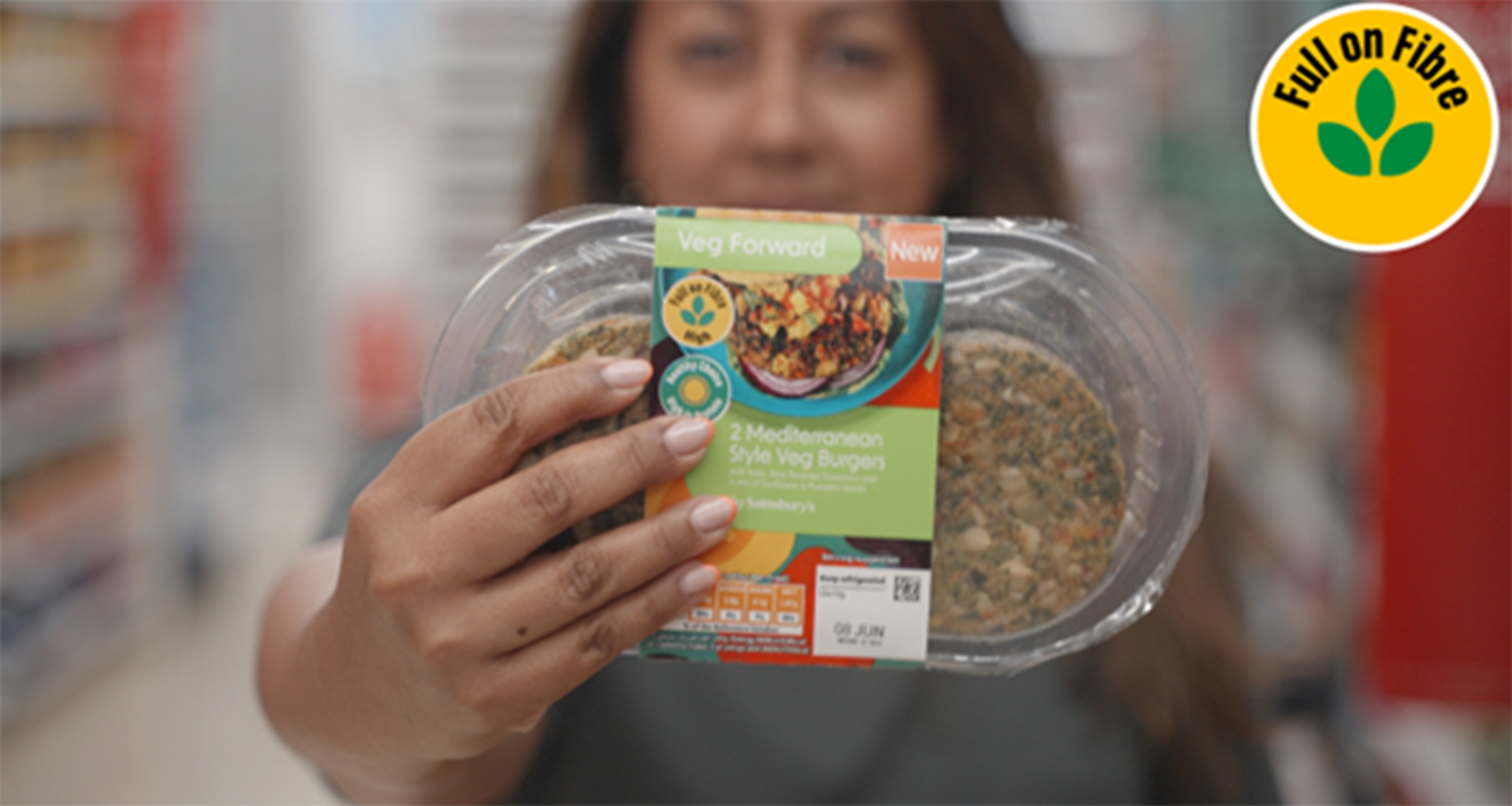
Sainsbury’s is expanding the use of front-of-pack nutritional labelling as part of a wider initiative aimed at increasing fibre consumption and fruit and vegetable intake across the UK by 2030.
The retailer has announced that its “Full on Fibre” label will be rolled out across more than 500 products, highlighting the growing role of packaging and label communication in supporting consumer food choices. The programme is intended to help shoppers identify higher-fibre products more easily both in-store and online.
According to Sainsbury’s, more than 100 products carrying the label are already included within its value-focused pricing programmes. The range covers staple food categories including oats, beans and broccoli, while additional labelled products are scheduled to be introduced during the summer.
The initiative comes as research cited by the retailer indicates that fibre awareness remains relatively low among UK consumers. While many respondents said they understood the importance of fibre in their diet, only 52% identified fruit and 58% identified pulses as sources of fibre. Sainsbury’s also noted that only 4% of the UK population currently achieves recommended fibre intake levels.
The programme reflects the increasing use of on-pack information as a tool for nutritional communication. As retailers and food brands seek to encourage healthier purchasing decisions, label design, content hierarchy and front-of-pack messaging are becoming more important components of consumer engagement strategies.
Simon Roberts, Chief Executive of Sainsbury’s, said: “Healthy eating shouldn’t feel difficult or complex – but for many families, it does. We know lots of people want to eat well but tight budgets, busy lives and confusing advice can make this feel overwhelming.”
Alongside the expanded labelling programme, Sainsbury’s is introducing promotions on selected fibre-rich foods and supporting wider initiatives aimed at improving access to healthier diets. The retailer said the measures form part of its broader efforts to increase consumption of fibre, fruit and vegetables while addressing affordability challenges faced by households.